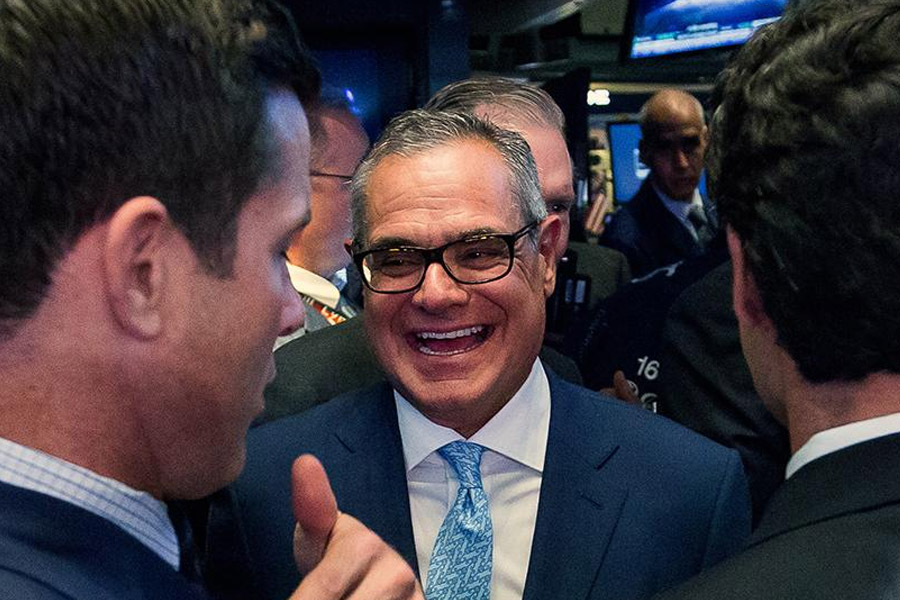
Early life, legal trouble, and the Ugly Duckling turnaround
I remember first reading about him as a case study in second acts. Born on May 1, 1957, he came from modest roots and learned early how to rework failure into opportunity. In October 1990 he pleaded guilty to a felony bank fraud charge tied to the Lincoln Savings episode. That conviction became a scar he carried into the next decade, but it did not define the arc of his life.
In 1991 he bought a bankrupt rent a car chain for a price many would call chancy. He stripped, rebuilt, and repurposed the business model. What was once a failed franchise became a machine for financing and selling used cars to buyers with imperfect credit. The pivot was not glamorous. It was practical, mechanical, and relentless. Like a gardener grafting a hardy root to produce a different fruit, he attached capital to inventory and made a market.
Career – the DriveTime era and the birth of Carvana
He built and reshaped a business that moved from local lots to national reach. The public chapter began in 1996 when the company went public under the ticker UGLY. Numbers proved both a blessing and a mirror. By the early 2000s the business had been taken private and rebranded into a dealership-and-finance operation focused on subprime buyers.
In 2012 a new idea took root – an online marketplace for used cars that would change customer expectations. That idea became Carvana. The son took the operational wheel, and the elder provided capital, governance, and guidance. Public markets met Carvana in 2017 when the company completed its IPO. From 2017 through the early 2020s the company expanded rapidly – tens of thousands of units sold per year, dozens of car vending machines opened across states, and an aggressive marketing machine.
Between 2020 and 2025 the financial narrative around the family tightened into public filings, share sales, and rapid changes in estimated net worth. There were waves of insider stock sales measured in hundreds of millions of dollars. Those transactions moved headlines and balance sheets. To understand him is to read both the rise of an entrepreneurial family and the gravitational pull of public markets.
Family and relationships – Ernest Garcia Iii and Elizabeth Joanne Garcia
I’ve seen this family story unfold in boardrooms and press. Ernie, his son and Carvana cofounder and CEO, represents the next generation. Son oversaw technology and product. The father provided funding and subprime auto lending expertise. Their national corporate alliance resembles a family corporation.
His spouse, Elizabeth Joanne Garcia, is a joint account holder or share transaction filer in several public filings. Although minor and technical, this fact is crucial to understanding family wealth and governance. Other children and relatives are mentioned in various reports, but the father-son relationship and their corporate entanglements dominate the public drama.
Personal profile, tastes, and residence
He’d dress for ledgers rather than glamour. He owned property in key coastal cities and a base in Arizona. Daily interviews and elaborate social media don’t interest him. Filings, company movements, and regional profiles measure his public visibility.
Described as strategic and private. In the 1980s, he switched from real estate to vehicles and loans. He survived lawsuits, rebrandings, public listings, and a decades-long reputation and reward negotiation. He built and retained capital by prioritizing scalability, repeatability, and risky consumers.
Numbers and a compact timeline
| Date | Event |
|---|---|
| 1957-05-01 | Birth |
| 1990-10 | Guilty plea in bank fraud case |
| 1991 | Purchase of a bankrupt rent-a-car chain |
| 1996 | Company goes public under ticker UGLY |
| 2002 | Company taken private and rebranded |
| 2012 | Carvana founded |
| 2017 | Carvana IPO |
| 2020-2025 | Large insider stock sales and public scrutiny |
These dates are the scaffolding I use when I try to explain a life that is both entrepreneurial and contested. They are blunt, clear marks on a long ledger.
Business style and leadership
He operates like an architect of systems rather than a showman. He looks for units that scale – a sales lot, a finance arm, a website. He then optimizes the plumbing. The result is a company architecture that couples inventory with financing and then layers in an online front end. That coupling enabled rapid expansion, and it also concentrated risk. When markets turned, the concentrated exposure became visible in valuations and in personal net worth swings.
Controversy and resilience
I cannot ignore the fact that controversy marks the narrative. The 1990 conviction looms large as a pivot point. After that, lawsuits and criticism have followed the business through its transformations. At the same time, resilience is visible in how assets were rebuilt and redeployed. The arc reads like a long game of financial chess – sacrifices, gambits, and eventual consolidation into larger holdings.
FAQ
Who is Ernest Garcia Ii?
I am describing a businessman born in 1957 who transformed a bankrupt rent-a-car chain into a national used-car finance and retail operation. He is the patriarch of a family that founded and scaled an online used-car business.
What happened in 1990?
In October 1990 he pled guilty to a felony bank fraud charge tied to a prominent thrift scandal. He received probation and later focused on building a business that would dominate a corner of the used-car market.
What companies did he build or influence?
He led a company that went public in 1996 under the ticker UGLY and later became DriveTime, a used-car finance and retail operator. He was a major backer of Carvana after its founding in 2012 and through its 2017 IPO.
Who are his principal family members involved in business?
His son, Ernie, co-founded Carvana and served as CEO. His spouse, Elizabeth Joanne Garcia, appears in joint financial filings and played a role in family governance of assets.
How did his wealth change in recent years?
Between 2020 and 2025 there were multiple large-scale insider stock sales reported publicly. Those sales caused significant changes in his estimated net worth as Carvana stock prices moved.
Is the family still involved in company governance?
Yes. Family members maintained substantial influence through ownership stakes and seats in corporate governance during and after the IPO period. The precise configuration has shifted with sales, filings, and corporate events.


