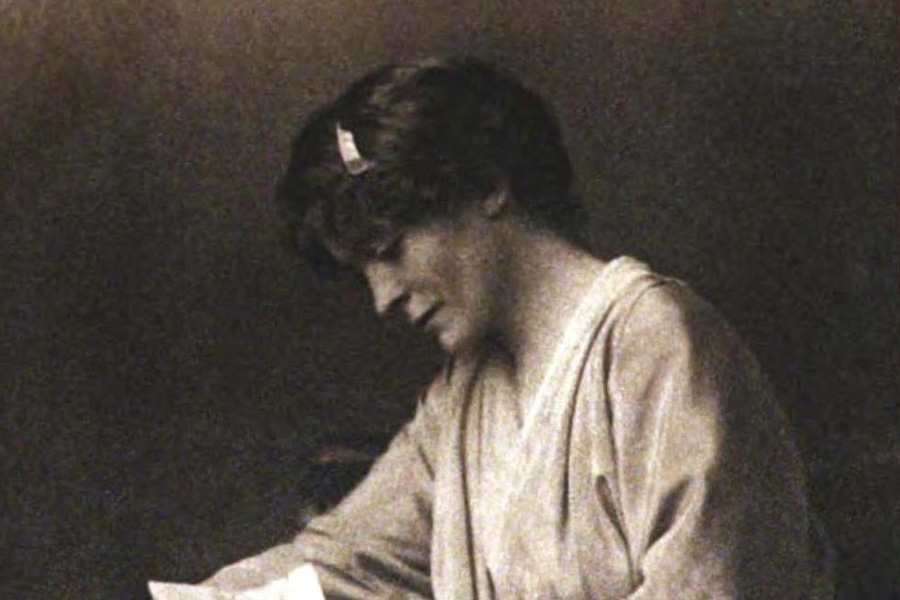
A life that began in Islington
I think of Amy Catherine Robbins as one of those figures history often keeps at the edge of the frame, even when her influence is large enough to cast a shadow across the whole picture. Born in Islington in 1872, she entered the world as Amy Catherine Robbins, though later records more often remember her as Catherine Wells, the wife of H. G. Wells and a writer in her own right. Her life moved through the late Victorian and early modern years with a mixture of restraint, intelligence, and practical strength. She was not a figure built for spectacle. She was the kind of person who held a structure together while others occupied the spotlight.
Her early years were shaped by family circumstances and education. After her father died, she pursued studies with the aim of becoming a teacher. That detail matters to me because it hints at discipline, ambition, and a mind oriented toward service as well as thought. Before she became known through marriage, she was already moving toward a professional life of her own. That foundation, quiet but solid, ran through everything that followed.
Marriage, companionship, and the domestic engine of a famous household
Amy Catherine Robbins met H. G. Wells while studying at the Tutorial College in Holborn, where he taught science. Their connection grew into marriage in 1895. On paper, the union links her name to one of the most famous writers of the era. In lived reality, it was far more textured. Their marriage was long, complicated, and intellectually charged. She was often called Jane by those close to her, a name that seems almost to soften the steel in her character.
I see her not as a passive wife but as a steadying force, a person who made a restless household function. She managed domestic order, typed manuscripts, handled bills, and helped keep daily life from collapsing under the weight of Wells’s ambitions and distractions. In a household full of movement, she was the hinge. He wrote, traveled, and pursued many relationships. She remained, adapted, endured, and maintained a home that served as the base for much of his work. That is not a minor role. It is the hidden architecture of a literary career.
Their marriage also reflects the tensions of the period. It was not a simple story of devotion. It was also a story of compromise, asymmetry, and emotional complexity. Yet she remained central to the Wells family for decades, and the family identity that grew from that marriage shaped the lives of their children and grandchildren.
Amy Catherine Robbins and her family members
I find it helpful to list the family members clearly, because her story is braided tightly with theirs.
| Family member | Relationship | Notes |
|---|---|---|
| Frederick Robbins | Father | Her father, whose death preceded her teaching studies |
| Maria Catherine Robbins | Mother | Her mother |
| H. G. Wells | Husband | English novelist and social commentator, married her in 1895 |
| George Philip Wells | Son | Known as G. P. or Gip, born in 1901 |
| Frank Richard Wells | Son | Born in 1903 |
| Oliver Craig Wells | Grandson | Son of George Philip Wells |
Her parents, Frederick and Maria Catherine Robbins, are well known for starting her life. She has few specifics, but they connect her to her family before stardom. I cannot consider them as footnotes because every life begins in a home, not a headline.
In public memory, her husband H. G. Wells predominate. His genius, prolificacy, and complexity were legendary. That complication cost Amy Catherine Robbins a lot. Their marriage produced two kids and a future familial line.
Gip, or George Philip Wells, was born in 1901. Zoologist and author, he was a scientist and writer. He joined the Wells family’s intellectual circle after working with his father on The Science of Life. He had a son, Oliver Craig Wells, who continued the family name.
Frank Richard Wells, born in 1903, is less well-known but vital to the family. The domestic life Amy Catherine Robbins built and maintained included him. A mother’s existence unites her children emotionally, even if historical records focus on different ones.
H. G. Wells’s past partnerships produced half-siblings other than her marriage. The main line of ancestry for Amy Catherine Robbins is George Philip Wells and Frank Richard Wells, however there is a wider web. As a mansion with many rooms, some illuminated and some partially in shade, her story is both intimate and enormous.
A writer with her own voice
Amy Catherine Robbins was not only a wife and mother. She was also a writer. Under the name Catherine Wells, she wrote stories and poems that were later gathered in posthumous collections. That body of work shows a literary mind attentive to feeling, atmosphere, and the pressures of everyday life. She wrote about fear, war, longing, domestic strain, and the strange emotional weather that passes over ordinary existence.
I am drawn to the way her writing seems to come from lived observation rather than performance. The work carries the grain of experience. It does not clang like a trumpet. It lingers like smoke after a fire. Her stories and poems show an ear for emotional truth and a clear sense of the inner lives of women living within constraint. That matters, because it places her inside literary history as more than a supporting character in someone else’s biography.
In later years, her reputation began to recover in a limited but meaningful way. Modern readers and editors have returned to her work with new interest, recognizing that she had a voice distinct from the man beside her. That recognition changes how I read the Wells household. It becomes not just the home of a famous writer, but a site where another writer was working quietly in parallel.
Financial life and daily work
It’s telling that Amy Catherine Robbins’s personal wealth isn’t documented. A picture of practical labor endures. She handled domestic duties, accounts, manuscript preparation, and the invisible jobs that made public success possible. If H. G. Wells was the engine, she was the concealed belt and axle system.
I think of her finances as home, not glamorous. She appears to have managed the everyday economics of a demanding family, where bills had to be paid, timetables adjusted, and domestic order survived a famous husband’s unpredictability. That work rarely makes headlines, yet it shapes a family as much as income.
Later years and death
By the 1920s, Amy Catherine Robbins had lived through decades of marriage, motherhood, and literary labor. She died of cancer in 1927, in October, and was cremated at Golders Green. Her death closed one chapter but did not end the family story. The posthumous publication of her writing soon after gave her a different kind of afterlife, one in which her voice continued speaking after her body was gone.
I find that especially moving. A life can be buried in biography, then slowly uncovered in print. That is what happened here. She was not merely remembered as someone’s wife. She began, at last, to reappear as herself.
Extended timeline of Amy Catherine Robbins
1872
Born in Islington, London.
Before 1895
Studies with the goal of becoming a teacher after her father’s death.
1895
Marries H. G. Wells.
1901
Gives birth to her first son, George Philip Wells.
1903
Gives birth to her second son, Frank Richard Wells.
1927
Dies of cancer on 6 October.
1928
Her writing is gathered and published posthumously.
2025
Renewed interest in her unfinished fiction and literary identity brings her back into public view.
FAQ
Who was Amy Catherine Robbins?
Amy Catherine Robbins was an English woman born in 1872 who became known later as Catherine Wells. She was the wife of H. G. Wells, the mother of two sons, and a writer of stories and poems.
Why is she sometimes called Catherine Wells?
She used the name Catherine Wells after her marriage. That name became the one most commonly attached to her literary work and public identity.
Who were her children?
Her sons were George Philip Wells and Frank Richard Wells. George Philip Wells was the more publicly documented of the two and became a zoologist and author.
Was Amy Catherine Robbins a writer herself?
Yes. She wrote fiction and poetry. Her work was published posthumously and later drew renewed attention for its emotional clarity and insight.
What was her relationship with H. G. Wells like?
Their marriage was long and influential but also difficult. She supported his work, managed much of the household, and lived through the complications of his many other relationships.
Did she have grandchildren?
Yes. One known grandchild was Oliver Craig Wells, the son of George Philip Wells.
Why does Amy Catherine Robbins matter today?
She matters because she was more than a famous writer’s spouse. She was a writer, a mother, and a stabilizing force in a major literary household. Her life reveals how much history is built by people who rarely stand in the center of the stage.


