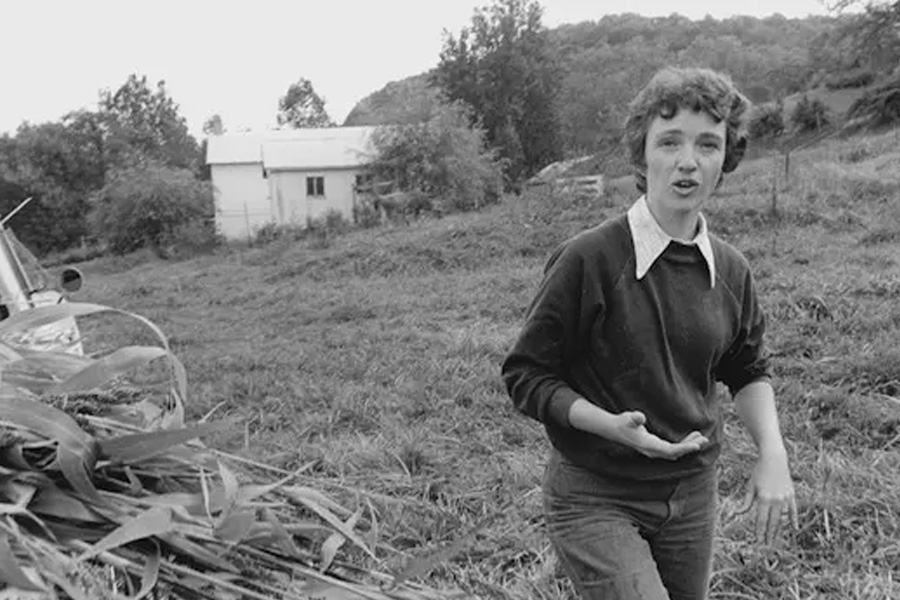
A life shaped by place, work, and devotion
I see Tanya Amyx as one of those rare people whose life reads like a field map: plain at first glance, but full of hidden paths, root systems, and seasons. She is often described in connection with Wendell Berry, yet that framing only catches part of the picture. Tanya Amyx has her own steady gravity. She is an artist, editor, homesteader, community organizer, mother, grandmother, and the quiet center of a long family story rooted in Kentucky.
Born in 1936, Tanya Amyx came from an artistic family with ties to California and Kentucky. That detail matters because it hints at a life already open to creativity and movement. She studied at the University of Kentucky, where she met Wendell Berry in 1955. Two years later, in 1957, they married. From that point on, their lives were braided together like young vines training up the same fence. In 1958, their daughter Mary was born. In 1962, their son Pryor Clifford, known as Den, arrived. By the mid 1960s, the family had settled in Henry County, Kentucky, where Tanya built not just a home, but a way of life.
The woman at the center of the household
Tanya Amyx was never simply a supporting figure. She was the first reader of Wendell Berry’s work, the one who typed, edited, and sharpened his writing before the world ever saw it. That kind of labor often goes unnoticed, but it is the hidden hinge on which many books turn. A manuscript without a trusted reader is like a barn without a roof in a hard rain. Tanya’s influence was practical, literary, and deeply personal.
I think what makes her story compelling is that she did not treat home as a small thing. She treated it as a craft. She learned to cook, preserve food, tend animals, and keep the household alive in a place that was not polished or easy. She and Wendell did not build a lifestyle around convenience. They built one around responsibility. Over time, they turned a neglected farm into a living home, one that held family, work, guests, animals, and ideas all at once.
Her life also included civic and community work. She served on a local library board, helped begin a foundation for education, and took part in religious and local leadership. That combination of domestic labor and public service tells me a great deal about her. She was not trapped inside a single role. She moved between rooms, fields, and meetings with the same patient energy.
Mary Berry and the next generation
Mary Berry, Tanya and Wendell’s daughter, directs the family work. Mary became Berry Center Executive Director, a family-owned agrarian and public organization. She married Trimble County farmer Steve Smith. That detail fits. In such families, marriage goes beyond private life. It integrates with work, land, and care ecology.
Mary represents continuity, not repetition. She is the next branch on the same tree, molded by the same soil but developing independently. That consistency shows Tanya’s impact. Daughters don’t led places like that by accident. Like a brook entering a valley, she slowly develops into it.
Tanya’s grandchildren expand the family tale. Katie Johnson, Virginia Aguilar, and Tanya Smith are grandchildren. Their presence expands the familial line. Tanya Amyx’s grandchildren carry the family name, memory, and principles of land stewardship, mutual care, and local rootedness.
Den Berry and the working farm legacy
Tanya’s son, Pryor Clifford Berry, better known as Den, is another important thread in the family fabric. He grew up on the farm, and his life has remained tied to practical work and rural continuity. Den married Billie Berry, and they have children of their own, including Emily and Marshall. The family has also welcomed the next generation again through granddaughter Eleanor.
Den’s life matters in the story because it shows that Tanya Amyx did not merely preserve memory. She helped create a living inheritance. The farm was not treated as a museum. It was treated as a working place, a place where children learned from the rhythm of chores, seasons, and responsibility. That is a rarer achievement than many people realize. It takes years to pass on a way of life without turning it into nostalgia. Tanya helped do that.
Billie Berry also belongs in this family portrait. She is part of the farm’s present tense, not just its history. Through Den and Billie, the family continues to farm, raise children, and keep the land in active use. That continuity is one of Tanya’s most important legacies. A family that remains close to its place across generations is not held together by sentiment alone. It is held together by labor, memory, and shared purpose.
Tanya Amyx as artist and witness
Tanya Amyx’s photography is a highlight of her public life. Her 1979 Flood farm hog killing work highlighted simple and profound rural labor. Photos are not sentimental ornaments. They observe. They demonstrate communal, seasonal, and land-based work.
This is especially telling because Tanya’s work and life seem to speak the same language. Both like attention. Both resist rush. Both recognize that life’s texture is often found in simple, repetitive tasks people hardly notice. Her photos convey the smell of frigid air, the weight of tasks, and the dedication of neighbors. Honest as used gloves.
Her artistic instinct matches her life. Tanya Amyx was always material. She lived in, watched, and shaped it. She doesn’t escape life in her work. It supports life clarity.
A family story built on continuity
When I put Tanya’s biography together with the family members around her, a clear pattern emerges. This is not a story of one famous person surrounded by accessories. It is a story of a family ecosystem.
Wendell Berry, her husband, is the public literary figure, but Tanya is the steady collaborator whose work helped sustain the household and the writing. Mary Berry carries public leadership forward through the Berry Center. Den carries the farming tradition through active work on the land. Billie Berry helps continue that path. The grandchildren expand the circle. Even the in laws and later generations appear as part of a wider fabric of care and inheritance.
What stands out most to me is that Tanya Amyx’s life is built on continuity without stiffness. The family changes shape across time, but it does not lose its center. There is a kind of moral architecture here, one made of kitchens, fields, books, children, board meetings, photographs, and long memory. It is not grand in the theatrical sense. It is grand the way an old oak is grand, by standing long and sheltering much.
FAQ
Who is Tanya Amyx?
Tanya Amyx is an artist, editor, farmer, mother, grandmother, and longtime spouse of Wendell Berry. Her public life is closely tied to Kentucky, family labor, and agrarian values.
What is Tanya Amyx best known for?
She is best known for her role as Wendell Berry’s first editor and as a central force in the Berry family’s home and farm life. She is also known for her photography, especially images of rural work and communal labor.
Who are Tanya Amyx’s immediate family members?
Her immediate family includes her husband Wendell Berry, her daughter Mary Berry, her son Pryor Clifford Berry, known as Den, and their spouses and children, including Steve Smith, Billie Berry, Katie Johnson, Virginia Aguilar, Tanya Smith, Emily Berry, Marshall Berry, and Eleanor.
What kind of work did Tanya Amyx do?
She worked as an editor, photographer, homemaker, community participant, and farm steward. Her life combined creative work with practical labor and local service.
How did Tanya Amyx influence Wendell Berry’s writing?
She served as his first reader and editor, helping shape the clarity and force of his work before publication. Her influence was intimate, exacting, and foundational.
Why does Tanya Amyx’s family matter in understanding her life?
Her family is central because her life was built around shared work, intergenerational continuity, and a rooted sense of place. Mary, Den, Billie, the grandchildren, and the larger Berry family all reflect the same values of care, labor, and belonging.


