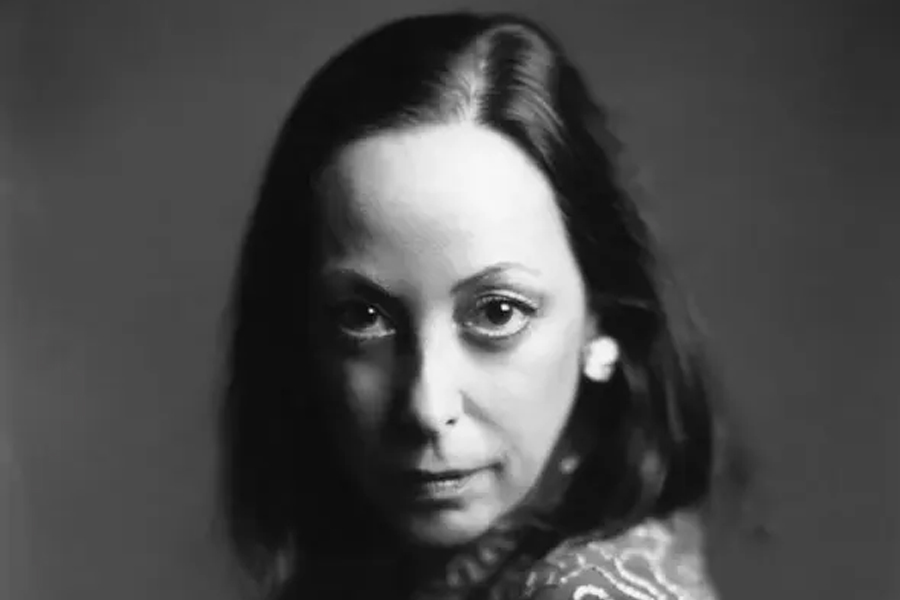
A New York Life Framed by Art
I keep thinking of Barbara Jakobson as someone who turned daily life into a kind of moving exhibition. She was not simply a collector who bought beautiful things and stored them away. She built a world around taste, memory, and instinct. Born in Brooklyn in 1933, she grew up across from the Brooklyn Museum on Eastern Parkway, where art was not distant or rare. It sat in the background like weather. That early proximity mattered. It shaped how she saw, how she chose, and how she later lived.
Her family background was rooted in Brooklyn, too. Her parents, Rose Petchesky and Joseph Petchesky, came from solid New York stock. Her mother already collected furniture and art, so Barbara inherited a home atmosphere where objects had meaning. A membership to the Museum of Modern Art, given to her by an aunt when she was about 12, added another spark. That small gift became a long fuse.
She attended Packer Collegiate Institute, Red Wing summer camp, Smith College, and later Wellesley for her senior year after marrying John Jakobson while still in college. That sequence tells me a lot about her life. It was not a straight line. It was a braid of ambition, marriage, motherhood, intellect, and collecting. She did not wait for a formal title to begin shaping culture. She stepped into it early and kept going.
The Collector as a Force of Nature
Barbara Jakobson began collecting in the 1950s, and she did it with a kind of electric certainty. In 1958, she bought a Jasper Johns work from Leo Castelli’s first show on installment. That detail feels almost cinematic. A young woman with limited money, a sharp eye, and a sense that the future was standing in front of her in paint and line. She saw before many others saw.
Her taste was wide, but never vague. She moved among artists, dealers, architects, and museum leaders with ease. Robert Mapplethorpe, Robert Morris, Jeff Koons, Diane Arbus, Frank Stella, Ed Ruscha, and Josef Albers are only part of the orbit around her. She did not just buy work. She helped create the conditions in which work could matter. She had that rare collector’s gift: she knew when the pulse of a new idea had begun.
She also loved architecture and design, and she treated her Upper East Side townhouse like a living stage. She and John Jakobson bought it in 1965, and after their divorce in 1983, she kept it and kept changing it. The house was not frozen. It grew, shifted, and accumulated meaning over time. I think that is one of the most revealing parts of her story. She did not collect to preserve a perfect past. She collected to keep life in motion.
Barbara Jakobson and the Public World
Barbara’s influence reached far beyond her own home. She joined the MoMA Junior Council in 1961, became head of it in 1971, and was elected to the board of trustees in 1974. Those dates matter because they show the scale of her engagement. She was not a ceremonial supporter standing at the edge. She was inside the machinery of the institution.
At MoMA, she worked on lectures, publications, membership, and the Art Lending Service. She helped organize exhibitions and supported the museum’s growth in tangible ways. In 1975, she organized Architectural Studies and Projects at MoMA. In 1980, she organized Architecture II: Houses for Sale. In 1983, she was behind Architecture III: Follies under the pseudonym B.J. Archer. That pseudonym is a lovely touch. It suggests mischief, freedom, and a refusal to be boxed in by one identity.
She was also a founding member of the Studio Museum in Harlem, and she later helped select Yoshio Taniguchi as the architect for MoMA’s expansion. That kind of work is invisible to many people, but it shapes cities and institutions like a hidden framework under plaster. Her hand was on the frame, even when her name was not on the wall label.
The Family Behind the Name
Barbara Jakobson’s family is a major element of her story. Her relationships were the heart of her art-described life.
Rose and Joseph Petchesky were her parents. Barbara’s eye was impacted by Rose. She gathered furniture and art, teaching Barbara to see objects as more than decoration. According to Barbara, Joseph was a lawyer from a large Brooklyn family. Her mix of order, domestic taste, and metropolitan identity appears to have stuck.
She married banker John Jakobson. She married him in college and they had three children. Barbara’s life revolved around family after their 1983 divorce.
Their children were Jenna Torres, Maggie Wheeler, and Pablo Jakobson, John Paul. Jenna Torres, a singer-songwriter, describes her mother’s close and active art life. Maggie Wheeler became famous for playing Janice on Friends. Public documents list John Paul Jakobson as deceased.
Barbara’s grandkids maintained family visibility. Ama Torres, Juno Alexandra Wheeler, and Gemma Remington Wheeler. Juno is publicly married to Noah Weinberg. Maggie Wheeler has two daughters, Juno and Gemma, while Barbara’s obituary lists three grandkids. A family tree is more than a list. It links art, performance, language, and memory.
A House Full of Evidence
Barbara Jakobson’s home was a biography in items, which was captivating. Her life was documented in the Upper East Side home. Jasper Johns, Rauschenberg, Koons, Albers, Morris, and others created functional art. Timestamps. They signified friendships, inclinations, experiments, and eras.
Collection may be financially burdensome, she knew. Christie’s sold works from her collection in 2005 for almost $1 million, with a share going to MoMA acquisitions. After her death in 2025, Christie’s announced that the Temple of Style collection sold for over 11 million dollars in one major sale and over 1 million online. Her eye was worth long after purchase, according to those calculations. Her taste was defined.
Here is a compact view of the family and their roles:
| Family member | Relationship | Publicly noted identity |
|---|---|---|
| Rose Petchesky | Mother | Collector, early influence |
| Joseph Petchesky | Father | Lawyer |
| John Jakobson | Husband, later ex husband | Financier |
| Jenna Torres | Daughter | Singer-songwriter |
| Maggie Wheeler | Daughter | Actress |
| John Paul Jakobson | Son | Deceased |
| Ama Torres | Grandchild | Publicly named granddaughter |
| Juno Alexandra Wheeler | Grandchild | Publicly named granddaughter |
| Gemma Remington Wheeler | Grandchild | Publicly named granddaughter |
The Long Arc of Her Timeline
Barbara Jakobson’s timeline reads like a series of bright hinges.
She was born in 1933. By about age 12, she had a MoMA membership in hand. In the 1950s, she began collecting. In 1958, she bought Jasper Johns. In 1961, she joined MoMA’s Junior Council. In 1965, she and John bought their townhouse. In 1971, she headed the Junior Council. In 1974, she joined the MoMA board. In 1975, she organized Architectural Studies and Projects. In 1980 and 1983, she staged architecture exhibitions that blended wit, design, and authorship. In 1983, she divorced John Jakobson. In 2005, her collection entered the auction world in a major way. In 2025, she died in Manhattan at age 92. In 2026, her collection was again in the spotlight through major Christie’s sales.
The arc is clear. She did not drift through culture. She pressed into it, shaped it, and left a trail that still glows.
FAQ
Who was Barbara Jakobson?
Barbara Jakobson was a New York art collector, patron, and MoMA trustee whose life was deeply tied to modern art, architecture, and design. I see her as someone who helped define taste in motion, not as a passive keeper of objects, but as an active force in the art world.
Who were Barbara Jakobson’s family members?
Her parents were Rose Petchesky and Joseph Petchesky. Her husband was John Jakobson. Her children were Jenna Torres, Maggie Wheeler, and John Paul Jakobson. Her grandchildren include Ama Torres, Juno Alexandra Wheeler, and Gemma Remington Wheeler.
What was Barbara Jakobson known for in her career?
She was known for collecting art early and intelligently, serving at MoMA in leadership roles, helping found the Studio Museum in Harlem, and organizing exhibitions related to architecture and design. She also helped shape the cultural life of New York through institutions and patronage.
Why is Barbara Jakobson important in art history?
She mattered because she recognized artists early, supported institutions, and treated collecting as a serious cultural act. Her townhouse, her museum work, and her acquisitions all formed a visible record of postwar and contemporary art history.
What happened to Barbara Jakobson’s collection?
Her collection was sold in major Christie’s auctions after her death, drawing strong results and renewed attention. The sales confirmed that her eye for art continued to carry weight in the market and in the broader story of collecting.


