1793 in Philadelphia
I hold a small, quiet story in my mind, the kind of story you find on a margin in a ledger. It is the year 1793. The city swells with people and fear. Fever moves like a thief. In the middle of that year a baby was born and then, like so many delicate things, did not survive the season. He left a name, a date, and the way his absence reshaped a household. That baby is the subject of this piece.
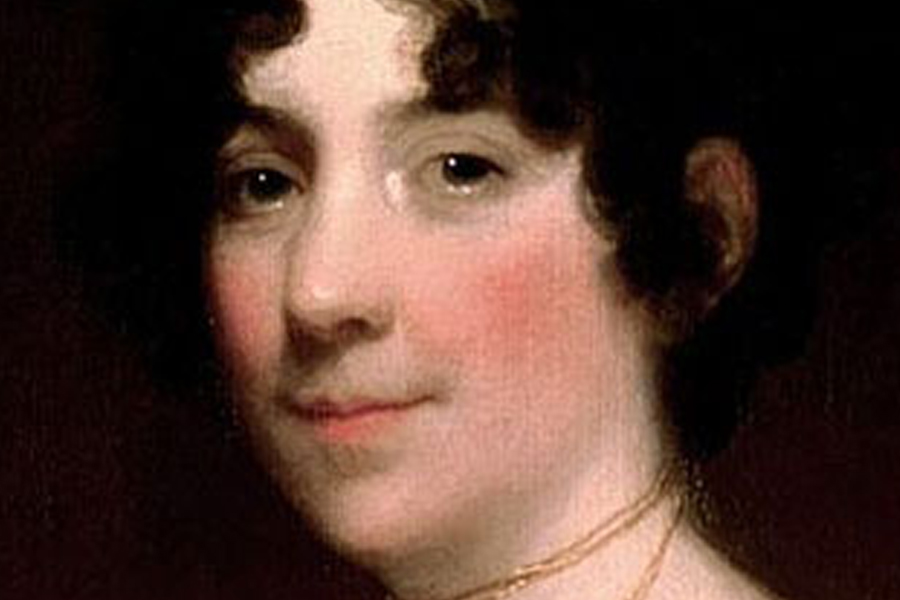
Mother: Dolley Madison
She probably has linen and anguish on her hands. She was young, married, and in a horrible public health crisis. City noise, carriage wheels, and stress dominate the backdrop. She lost her husband and baby son to the pandemic in 1793 after having a son in 1792. Her life shifted. After rebuilding it in the capital, she became known for her social grace and room command. Despite its latter brilliance, loss was always present. That stitched her life together.
Father: John Todd Jr.
He was a Quaker and a young man in a bustling city. He married and fathered two sons in the span of three years. In the sweep of the epidemic he and the youngest child did not survive. I picture the household ledger with entries for bread, for candles, and then a hollow line where names stop. He does not leave a career of public renown. He leaves a family forged in absence, a widow tasked with the impossible work of carrying forward.
Brother: John Payne Todd
The living sibling complicated his mother and stepfather’s lives. Born February 29, 1792, he continued the family name but lived a busy life. Debts and unpredictable periods plagued his adulthood, worrying his caregivers. I picture him as a storm-torn tree with shaky roots. His biography is longer because he reached adulthood and left behind good and poor choices that influenced family fortunes later.
Stepfather: James Madison
He did not father the baby, yet his life became woven into the same fabric. He married the widow in 1794, taking into his household a son and a network of responsibilities. He was a public man, later a president, and the quiet force who tried to manage family matters behind the stage curtains of politics. I picture him balancing ledgers and letters, sometimes forced to deal with the consequences of debts and social expectations.
The household and the wider kin
I imagine a small cluster of names that orbit the central family: sisters, relatives, neighbors, and the invisible servants and lives bound by service and the economy of the time. Lives overlap. A younger sister keeps house. A neighbor brings news. The epidemic leaves its tally and then a slow, hush-like recovery. For me the family reads like a map of small towns and large ambitions, stitched together by marriage, survival, and social maneuvering.
Timeline Table
| Year | Event |
|---|---|
| 1790 | Marriage that began the family household |
| 1792 | Birth of the older son on February 29 |
| 1793 | Birth and death of the infant in the fever season |
| 1793 | Death of the husband in the same epidemic |
| 1794 | Marriage to a new husband who later shapes national history |
Numbers can anchor a story. Dates act like fence posts along a long road. I use them because they stop the narrative from floating.
What the name carried forward
I say this: a name can be a small hammer that shapes what follows. The infant left a hole that altered decisions, marriages, and the paths of living relatives. Because he did not live to take a place at a table, that table felt different. It mattered to the surviving brother, to the mother who went on to become a major public presence, and to the man who later became the head of a nation and a family.
Voices I try to hear
I listen for the sounds the records do not give me. A mother rocking in an empty room. A stepfather looking at a map and then at a bill. A brother staring at the far horizon and making choices that ripple. These are not dramatic tableaux. They are soft, made of small decisions, and they add texture to what might otherwise be a footnote.
FAQ
Who was William Temple Todd?
I answer plainly: he was an infant born in 1793 who died during the yellow fever season in Philadelphia. He did not grow into a public life. His significance is quiet. It lives in the way his family reorganized after his death.
How is he connected to notable figures of the era?
He was the son of a woman who later married a future president. The web is family and society. One thread runs from the city to the halls of public life. I see his brief life as a hinge between private sorrow and public reinvention.
Did he leave descendants or a personal estate?
No. He died in infancy and left no direct descendants and no recorded estate. The surviving brother and the stepfather managed later family affairs, and their choices shaped the legacy more than the infant could.
Are there records that list him by name and date?
Yes. He appears in family registers and in the small notations of the time. Those entries are concise: a name, a year, a notation of death. I find that kind of brevity haunting. It is the record of a life that barely intersected with the world, yet mattered to those who had to move on.
Why write about someone who lived so briefly?
I write because absence can be as revealing as presence. When I look at the space left by this child, I can see how families reweave themselves after loss. I can see how one small life, though short, influences choices, alliances, and the texture of later years. Names on a page are not just entries. They are the first light of stories that, when read closely, reveal the human architecture behind history.


