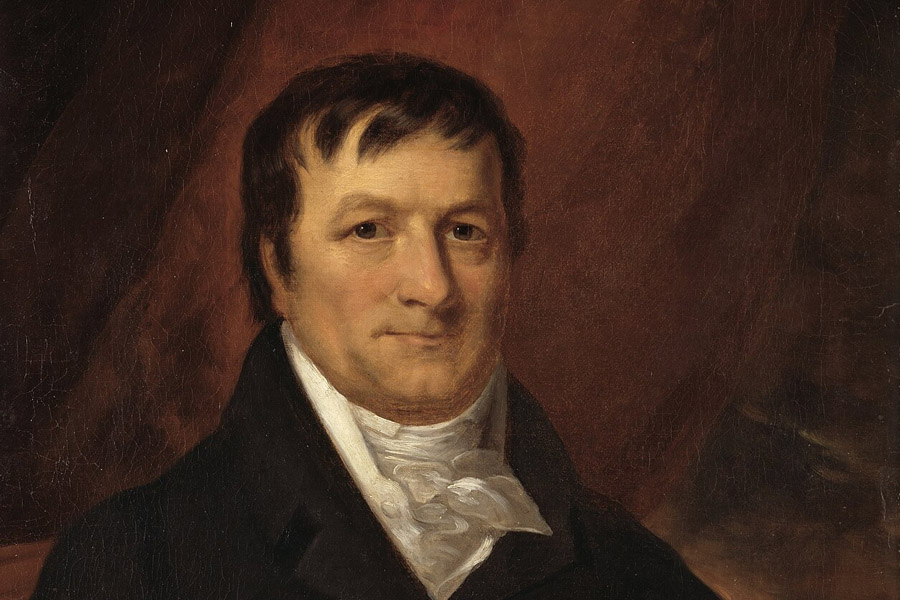
Johann Jacob Astor, better known in American history as John Jacob Astor, transformed a modest beginning into one of the greatest fortunes of the nineteenth century. His life was a story of ambition, timing, discipline, and calculated risk. Like a skilled chess player who always seemed to think several moves ahead, he recognized opportunities long before others did. From the fur trade to Manhattan real estate, every major decision shaped not only his own future but also the fortunes of generations of the Astor family.
Basic Information About Johann Jacob Astor
| Information | Details |
|---|---|
| Full Name | Johann Jacob Astor (later known as John Jacob Astor) |
| Born | July 17, 1763 |
| Birthplace | Walldorf, Electoral Palatinate, present day Baden-Württemberg, Germany |
| Died | March 29, 1848 |
| Age at Death | 84 |
| Nationality | German born American |
| Occupations | Merchant, Fur Trader, Businessman, Real Estate Investor |
| Spouse | Sarah Cox Todd |
| Children | Eight |
| Most Famous Company | American Fur Company |
| Estimated Estate at Death | $20 million to $30 million |
| Burial Place | Trinity Church Cemetery, New York City |
Early Life and Family Origins
I picture Johann Jacob Astor as a young man from average backgrounds, not inherited privilege. Walldorf, near Heidelberg, was his birthplace on July 17, 1763. His butcher father, Johann Jacob Astor, supported the family with hard work. Johann Jacob’s mother, Maria Magdalena Vorfelder, died young, affecting the family.
The Astor family was descended from Waldensian Protestants who emigrated from Italy and Switzerland to Germany. Resilience through generations of migration and religious perseverance.
Johann Jacob worked in his father’s butcher shop and sold dairy as a child. He learned discipline, bookkeeping, and persistence from his early duties.
Moving to London and Learning Business
Around 1779, at approximately sixteen years old, Johann Jacob left Germany for London to join his older brother George. Together they worked in their uncle’s musical instrument business, producing and selling flutes and pianos.
This period proved extremely valuable. He learned English, adapted to British commerce, and even anglicized his name. While he would later become famous for fur trading and real estate, his earliest business education actually came from manufacturing and selling musical instruments.
Some historical accounts also associate him with early piano manufacturing ventures that eventually became connected with what later developed into the Francis Bacon Piano Company.
Immigration to America
Following the end of the American Revolutionary War, Johann Jacob Astor sailed to the United States in late 1783 or early 1784. He reportedly arrived in Baltimore carrying only about $25 and several flutes.
During the voyage, a conversation with a fur trader changed the direction of his life. Sometimes history turns on surprisingly small moments, and this chance meeting inspired Astor to enter the North American fur trade.
After arriving, he settled in New York City and initially worked alongside his brother Henry, who operated a butcher shop.
Building a Fur Trading Empire
The fur trade quickly became the foundation of Astor’s growing fortune.
He began by purchasing animal pelts from Native American trappers before processing and exporting them to Europe. As demand increased, his network expanded across the Great Lakes and into western territories.
Several milestones defined this remarkable rise.
| Year | Event |
|---|---|
| 1780s | Entered the New York fur trade |
| 1794 | Benefited from the Jay Treaty and expanded into Canada |
| 1799 | Began investing heavily in Manhattan real estate |
| 1808 | Founded the American Fur Company |
| 1811 | Established Fort Astoria |
| 1810 to 1812 | Sponsored the Astor Expedition |
The American Fur Company became one of the largest commercial enterprises in North America. Through careful organization and aggressive expansion, Astor built something close to a monopoly after federal policies in 1816 limited foreign competition.
Real Estate Became His Greatest Fortune
Although the fur trade made Johann Jacob Astor wealthy, Manhattan real estate made him extraordinarily rich.
Beginning around 1799, he purchased farmland and undeveloped property north of the city’s population center. While others focused on the busy downtown districts, Astor quietly accumulated land where future neighborhoods would eventually emerge.
His strategy was simple but brilliant.
Rather than constructing expensive buildings, he often leased land to others. This generated dependable income while allowing property values to appreciate over time.
As New York expanded northward decade after decade, Astor’s holdings increased dramatically in value. His patience resembled planting an orchard whose harvest would continue for generations.
By the 1830s, he gradually withdrew from active fur trading and devoted nearly all of his attention to property investment.
Marriage to Sarah Cox Todd
One of the most important figures in Astor’s life was his wife, Sarah Cox Todd.
The couple married on September 19, 1785. Sarah was the daughter of Scottish immigrants Adam Todd and Sarah Cox. Although her dowry amounted to only about $300, her contribution to the family fortune proved far greater.
While Johann Jacob traveled extensively, Sarah managed household finances and frequently assisted with business matters. Many contemporaries praised her intelligence, careful judgment, and practical decision making.
Some obscure stories claimed that jealous rivals accused Sarah of witchcraft because of the family’s extraordinary success. These claims were entirely unsubstantiated and reflected superstition rather than evidence.
Johann Jacob deeply mourned Sarah after her death in either 1832 or 1834, depending on historical records.
The Astor Children
Johann Jacob and Sarah had eight children, although several died during infancy or childhood, which was sadly common during the period.
Magdalena Astor
Born in 1788, Magdalena first married Adrian Benjamin Bentzon. The marriage proved unhappy, and two of their children died in infancy. She later married Reverend John Bristed in 1820 and became the mother of Charles Astor Bristed, who later became an author and scholar.
Sarah Todd Astor
Born in 1790, Sarah Todd Astor died at birth or shortly afterward.
John Jacob Astor Jr.
Born in 1791, John Jacob Astor Jr. struggled throughout life with poor health and significant mental disabilities. Because of these limitations, he never assumed leadership within the family business and remained under family care.
William Backhouse Astor Sr.
Born in 1792, William became his father’s principal heir and the architect of the next generation of Astor wealth.
After marrying Margaret Alida Rebecca Armstrong, daughter of Senator John Armstrong Jr., William expanded the family’s already enormous real estate empire.
His capable leadership ensured that the Astor name remained one of America’s most influential for decades.
Dorothea Astor
Born in 1795, Dorothea married Walter Langdon. She became associated with the Langdon Estate and maintained strong family connections throughout her life.
Henry Astor II
Henry was born in 1797 but died in 1799.
Eliza Astor
Born in 1801, Eliza married diplomat Vincent Rumpff. She died in 1838 at a relatively young age.
Unnamed Son
A final son was born in 1802 but survived only briefly.
Johann Jacob Astor’s Parents and Brothers
The Astor family’s story extends beyond Johann Jacob himself.
His father, Johann Jacob Astor, remained in Germany operating the family butcher business until his death in 1816.
His mother, Maria Magdalena Vorfelder, passed away while her youngest son was still a child.
Among his brothers, George Astor remained in London managing the musical instrument business.
Henry Astor emigrated to New York before Johann Jacob. Besides running a successful butcher shop, Henry became famous in horse breeding after importing the thoroughbred Messenger in 1788. Messenger became the foundation of the American Standardbred horse line.
Melchior Astor remained in Germany and lived a quieter life compared to his internationally known brothers.
Grandchildren Who Continued the Dynasty
The Astor fortune did not disappear after Johann Jacob’s death.
William Backhouse Astor Sr.’s son, John Jacob Astor III, became a respected businessman, philanthropist, and Civil War supporter.
Another grandson, William Backhouse Astor Jr., expanded family investments while becoming well known as a yachtsman and horse breeder.
His son, John Jacob Astor IV, later became one of the most famous members of the family after losing his life aboard the RMS Titanic in 1912.
Across both American and British branches, the Astor family remained influential in business, politics, philanthropy, and society for generations.
Business Philosophy and Personal Character
Johann Jacob Astor was foresighted.
He predicted fashion trends, understood international trade, and saw Manhattan’s future potential before other investors. Trade posts, warehouses, ships, and financial assets made up his global empire.
His reputation was complicated. His knowledge, discipline, and vision were admired. Critics called him ruthless and competitive.
Later in life, he was philanthropic. He helped John James Audubon and educational and cultural organizations that survived his death.
Wealth and Lasting Legacy
When Johann Jacob Astor died on March 29, 1848, his estate was estimated between $20 million and $30 million, an almost unimaginable fortune for the era.
Modern comparisons vary widely, with estimates ranging from hundreds of millions to well over $100 billion depending on the method of calculation. More importantly, his wealth represented an extraordinary share of the entire American economy at the time.
His investments shaped the physical growth of New York City, while his descendants carried the Astor name into business, philanthropy, politics, architecture, and international society.
FAQ
Who was Johann Jacob Astor?
Johann Jacob Astor, commonly known as John Jacob Astor, was a German born American businessman, fur trader, merchant, and real estate investor who became the first prominent multi millionaire in United States history.
When and where was Johann Jacob Astor born?
He was born on July 17, 1763, in Walldorf near Heidelberg in the Electoral Palatinate, which is now part of Baden-Württemberg, Germany.
Who were Johann Jacob Astor’s parents?
His parents were Johann Jacob Astor, a butcher, and Maria Magdalena Vorfelder, who died while he was still young.
Who was Sarah Cox Todd?
Sarah Cox Todd was Johann Jacob Astor’s wife and an important business partner. She managed family affairs, provided practical financial advice, and contributed significantly to the family’s success.
Which child inherited most of Astor’s fortune?
William Backhouse Astor Sr. inherited the largest portion of the estate and successfully expanded the family’s real estate empire.
What made Johann Jacob Astor so wealthy?
His fortune came from several businesses, including the fur trade, international commerce, limited involvement in the China trade, government investments, and especially New York City real estate.
What was the American Fur Company?
Founded in 1808, the American Fur Company became one of the largest fur trading organizations in North America and played a major role in Astor’s rise to immense wealth.
Did Johann Jacob Astor have famous descendants?
Yes. His descendants included John Jacob Astor III, William Backhouse Astor Jr., and John Jacob Astor IV, who became widely known after the sinking of the Titanic in 1912.
Where is Johann Jacob Astor buried?
He was buried at Trinity Church Cemetery in New York City after his death on March 29, 1848.


